Thursday, September 3, 2009

Dahr Jamail: Obama Channels Bush on Promoting Afghan War

Talk Nation Radio for September 3, 2009 Dahr Jamail: Obama Channels Bush on Promoting Afghan War

Part one of a series:
Dahr Jamail's Will to Resist War Tour of Connecticut. September 19th, 20th, and 21st, Dahr Jamail will speak to students, veterans, and the general public at six locations in Connecticut. Despite promises of a more peaceful and diplomatic U.S. strategy, President Obama is moving ahead with strategies that will depend on the use of force. Bogged down in Iraq, the Military keeps escalating the war in Afghanistan. That despite an obvious lack of available personnel.


Produced by Dori Smith, Storrs, CT
TRT: 29:39
Download at Pacifica's Audioport here or at Radio4all.net and Archive.org

Part two Dahr Jamail, Sept 10, 2009
Dahr Jamail on the Will to Resist within the US Military


Will to Resist War book tour Connecticut 2009!

On September 19th, 20th, and 21st, Dahr Jamail will speak to students, veterans, and the general public at six locations in Connecticut. He will be in Willimantic at the Wrench in the Works collective and Eastern Connecticut State University, in Storrs, at the University of Connecticut's Dodd Center, in Hartford at the Hope Out Loud festival, in New Britain at Central Connecticut State University, and in Middletown, at Wesleyan University where he will share the stage with singer/songwriter David Rovics.

Connecticut is Obama country, and support for the President continues, yet, peace activists here hope to also make it Dahr Jamail country.

They are concerned about civilian lives, money for war that could be used for social programs at home, but they are also heavily supported by US veterans groups with similar goals. Right now the US is sending even decorated war heroes to prison, detention at the dreaded Echo Platoon facility and others like it, for refusing to deploy to Iraq or Afghanistan.

Thousands of wounded soldiers are being deployed, and the lives of hundreds of thousands of soldiers are in tatters. Still they are being asked to serve a policy that is running in the background of the Obama White House like the rogue computer in the film War Games.

US and British commanders argue that US security interests are at stake, they point to the presence of Taliban and Al Qaeda militants in Pakistan, Afghanistan, and Iraq, as their argument for continuing the US Military policies enacted by former President George W. Bush and Vice President Dick Cheney. But veteran journalist Dahr Jamail explains that the real reasons for the war continue to be oil pipeline routes and U.S. corporate interests. Meanwhile, the lives of tens of thousands of US soldiers are at stake. As more and more of them refuse to deploy the Bush military policies of using threats and blackmail against them to force them to return to war are also continuing under President Obama.

Dahr Jamail: 'When we hear President Obama standing up there talking about using those superlatives that you just talked about, war on terror, and "the just war, and the preservation of western civilization depends on it, this kind of thing, he is really channeling George Bush. Because he is actually engaged in using the propaganda to conceal the fact that we have the same US agenda now as we did last year and the year before that and the six years before that and the twenty years before that. We are looking at the US empire project, and we are looking at the continuation of the same national security strategy, the same Quadrennial Defense Report, the same secretary of defense, and just all of the same high ranking echelons in the Pentagon that we had under Bush we have the same under Obama, and of course the same corporate interests at work today as we did last year and the year before that and a lot of the decades before that.

'So we look at a situation in Afghanistan where we have four major US Military bases located specifically along a proposed pipeline route, the same proposed pipeline route that brought the Taliban over to this country under the Bush administration for meetings, the same proposed pipeline route that the Clinton administration had engaged in talks with the Taliban about. And those obviously didn't work so we have to use war as politics and that's exactly what it is, so as a last resort of politics the US decides to invade and occupy the country to defend it's so called national security interests which are the shipping lanes, in this case the shipping pipeline lanes, for natural resources and control of those. And that's what this is all about'.

Find out more about Dahr Jamail's Connecticut Tour here

Contact the Center on Conscience and War, and the GI Rights Hotline

Contact us at talknationradio@gmail.com and look for us on Facebook and Twitter.

Dahr Jamail's 2008 book, Beyond the Green Zone, Dispatches from an Unembedded Journalist in Occupied Iraq. Haymarket, An award-winning, unembedded journalist tells the hidden story of American soldiers turning against military occupation.

“Dahr Jamail’s human portrait of the men and women who turned away from the project of empire should serve as a beacon…The truth they tell demands that we find the courage to make our nation accountable for the crimes committed in our name.”
- From the Foreword by Chris Hedges

Dahr Jamail, author of Beyond the Green Zone, brings us inside the movement of military resistance to the occupations of Iraq and Afghanistan. Since 2006, a majority in the United States have opposed the continued occupation of Iraq, and increasing skepticism surrounds the escalation in Afghanistan. But how do the soldiers who carry out the American occupations see their missions?

“Dahr Jamail’s Beyond the Green Zone is the response to the embedded, propagandistic corporate media empire that played a crucial role in making the invasion and occupation of Iraq possible and helps ensure its continuation. While the powerful media conglomerates embedded on the ground with the invading and occupying forces — and ideologically with the men running the war — Jamail embedded in the blood-soaked streets of Fallujah and Sadr City with the suffering people of Iraq and uncovered the horrors of this war of ‘liberation.’ With trademark bravery and a quiet and humble commitment to telling the stories of those forced to live on the other end of the barrel of the U.S. foreign policy machine gun, Jamail ensured that the history of the Iraq occupation would not be written exclusively by self-proclaimed victors and the powerful. Simply put, Dahr Jamail is the conscience of American war reporting, the quintessential un-embedded reporter.”
—Jeremy Scahill, New York Times best-selling author of Blackwater: The Rise of the World’s Most Powerful Mercenary Army (More about this book including where to purchase it here


News & Media Blog Directory

Thursday, August 27, 2009

Ridgely Fuller, US Weapons to Israel, Health Crisis for Gaza War Victims

Talk Nation Radio for August 26, 2009
Ridgely Fuller, US Weapons to Israel, Health Crisis for Gaza War Victims

Codepink member speaks out about DIME (dense inert metal explosive) weapons sold to Israel by US during the Bush administration's tenure in the White House. See also Democracy Now coverage of Dime here.


Codepink member Ridgely Fuller on TNR, see web site here

TRT:29:45
Produced by Dori Smith
Download at Pacifica's Audioport here and at Archive.org and Radio4all.net


Or (64 bitrate) Click and play: here

Ridgely Fuller is a social worker and Tufts' School of Law and Diplomacy graduate with a deep commitment to peace in the MidEast. She has used her skills to foster healing after Israeli air attacks left 5,000 Gazans wounded during the winter of 2009. She visited Israel and Palestine during 2002, again in 2003, and her latest visit was in June of 2009. She has also worked to foster understanding between US, Israeli, and American Jews and Palestinians, working to support regional woman's organizations and human rights groups in Israel and Palestine by participating in an international woman's march and other activities.

Click here to watch a video of Ridgely teaching a large group of Palestinian kids the Hokey Pokey online at Youtube.

Ridgely Fuller is touring the East Coast with a slide show on Palestine, and will visit Connecticut on September 14th to speak at the First Church of Christ in Mansfield. Her talk will begin at 7 PM. The well known church is located at 549 Storrs Rd. at the intersection of Routes 195 and 89. The event is sponsored by the Israel/Palestine Peace, Education and Action Group of Eastern Connecticut.

Topics for this week's program:

1. Israel has continued it's pressure on Palestinian fisherman, curtailing still more of the amount of farm land that can be used for food and market crops by shooting at farmers even before they cross an Israeli imposed boundary on Palestinian land.

2. Israel has been blocking efforts to complete a new hospital facility that would treat 5,000 civilians wounded during Israeli attacks this past winter. Brand new equipment such as a new MRI machine cannot be used because Israel refuses to allow an isotope part to be brought into Gaza.

3. Parts of Gaza still flattened from Israeli air strikes, otherwise some reconstruction efforts have taken place but most are still being blocked.

4. Importance of person to person diplomacy, US and Palestine.

Be sure to visit our new blog: http://willtoresistwar.blogspot.com/ where you will find a complete listing of events featuring journalist Dahr Jamail who has been a frequent guest on Talk Nation Radio. Dahr will speak in Willimantic at the Wrench in the Works collective, Sat. Sept 19, 2009, time to be announced, and at Hope Out Loud 8, Bushnell Park, Hartford, Sunday Sept 20th, UCONN, The University of Connecticut in Storrs, CT., then on Monday September 21, 2009 he will speak to students and the general public at ECSU, Eastern Connecticut State University, followed by a talk at CCSU, Central Connecticut State University and then Wesleyan University in Middletown. See blog for details and lists of sponsors.

Note: Singer/Songwriter David Rovics has been added to the program at Wesleyan University Monday September 21, 2009 at 8 PM in Middletown, Connecticut.

Join us next time as we hear about Dahr Jamail's new book: The Will to Resist: Soldiers Who Refuse to Fight in Iraq and Afghanistan. Monitor the blog for updates on events.


News & Media Blog Directory

Thursday, August 20, 2009

Afghanistan's Invisible History, Gould and Fitzgerald

Talk Nation Radio for August 20, 2009

Afghanistan's Invisible History, Gould and Fitzgerald
Part two of two, each stands alone


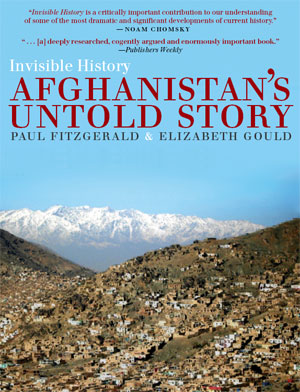
Authors of the book, 'Invisible History, Afghanistan's Untold Story'

TRT: 29:52 music fades 12 seconds
Produced by Dori Smith
Download at Pacifica's Audioport here: Or try Radio4all.net and Archive.org

Music by Fritz Heede

Topics include:
-The history of British and US imperialists who have long sought to dominate Afghansitan.
-What the Obama administration must and must not do.
-The cost of the Afghan war, could Afghansitan bankrupt America?
-How US foreign policy has strengthened the extremists and undermined social progress.

We turn once again to our discussion with Elizabeth Gould and Paul Fitzgerald, the husband and wife writing team who were the only journalists to gain access to Afghanistan in 1981, after the Soviet invasion. They then co wrote the book, "Invisible History, Afghanistan's Untold Story." Their web site is: http://www.invisiblehistory.com.

As Afghans go to the polls, we consider the impact of US foreign and military policies on their country dating back to the 1970s. Their book delves into the history dating back to before the turn of the century, and reveals a budding democracy, woman's rights, up until US support for misogynist war lords like Gulbadin Heckmaytar, led to an increase in power for extremists.

Afghanistan is vital to the foreign policy interests of many nations. But the real history of the impact of British colonialism, and America's covert alliances with war lords and terrorists dating back to the 1970s and 1980s, is seldom discussed.

Elizabeth Gould and Paul Fitzgerald offer their insights and warnings to President Barack Obama, and assess how US foreign policy is going. They also assess the role played by individuals with commitments to a form of mystical imperialism, with goals of dominating Afghanistan. They will not succeed, according to the authors.

If they befriended the Afghan people, took measures to re-stabilize their country, and build a strong Afghanistan, the US would insure stability and friendship in the region.

Syndicated with Pacifica Network

Articles of interest:
PBS Dares to Show Civilian Casualties in Afghanistan
A note from Dori

PBS finally offered solid coverage in the form of a video from Nima Elbagir of Independent TV News. The film, Afghan War takes toll on civilians, left Jim Lehrer speechless, so much so in fact that he neglected to remind viewers at the end of this clip that Elbagir provided it.

Right after the film which aired Friday August 21, 2009, during the Jim Lehrer News Hour, two more traditional talking heads rolled into place for 'discussion' of Afghanistan policy and health care in America.

It seemed to me that both David Brooks, the NY times columnist, and WA Post's Ruth Marcus, were also speechless for a few seconds after viewing the coverage from Mir Wais hospital, Kandahar. It didn't take these two professionals long though, they were soon jabbering away about this side v that side on policies as usual.

Now if we could only get PBS to sign a contract with Nima Elbagir so that she might be on all the time! That would be a great way to improve coverage in general. Her video showing the casualties of both the US operation in Afghanistan and the Taliban or Al Qaeda, helps us cut to the chase in our analysis of what is happening in this long suffering country.

Once we evaluate the way a US policy is unfolding in how it impacts human beings, both civilians and US soldiers, we understand that there must never be an argument made for war without first considering all other options.

When Gould and Fitzgerald spoke about the impact of empire builders on Afghanistan, they also centered much of their research on how the policies of Great Britain, America, Russia, and Pakistan, have played out on the ground for civilians. Their book, 'Invisible History, Afghanistan's Untold Story', helps us realize that Afghan society would have been far better off before the arrival of empire builders like Zbigniew Brzezinski.

Finally, before airing Nima Elbagir's clip, Jim Lehrer issued a warning to viewers that some of us might find the film disturbing. Indeed, and that is why we should all view it! I only hope people didn't switch the set to another channel at that point.

See also:

World Focus, August 18th operation Leslie Hilsum, ITN especially the portion of her clip where she offers the words of Colonel Grevill Bibby, British Army, explaining that he had arrived in Afghanistan on behalf of her royal highness the Queen of England. Just like the old days...

And, Afghanistan news, New York Times, elections


News & Media Blog Directory

Thursday, August 13, 2009

Elizabeth Gould and Paul Fitzgerald on Afghanistan's Invisible History

Talk Nation Radio for August 13, 2009

Elizabeth Gould and Paul Fitzgerald on Afghanistan's Invisible History

Topics:
*The Durand Line, created in 1893 by India's Foreign Secretary, Sir Mortimer Durand.
*Former Afghan leader, Mohammed Daoud, and his difficulties with US anti-communist figures who thought he might be 'turning lefty'.
*Former National Security Advisor Henry Kissinger, under Nixon, and former National Security Advisor, Zbigniew Brzezinski, under Carter.
*The introduction to 'Invisible History' was written by human rights expert Sima Wali. She wrote about the important roles Afghan women held prior to the late 1970s when she fled the country. Gould and Fitzgerald discuss the Afghanistan they saw, the one Sima Wali grew up in, versus the one US policies helped create under several different US administrations extending from Nixon through George H. W. Bush and George W. Bush.


TRT: 29:19
Produced by Dori Smith, Talk Nation Radio studios, Storrs, CT
Syndicated with Pacifica Network
Download at: Pacifica's Audioport here or at Radio4all.net and Archive.org in various formats for broadcast, podcast.

Elizabeth Gould and Paul Fitzgerald join us to talk about their book, 'Invisible History, Afghanistan's Untold Story'. This book tells the real story behind the propaganda. (City Lights books, San Francisco). Their blog is Invisible History.

After the Soviet Union invaded Afghanistan in 1979, all Western media was expelled. But in 1981, Elizabeth Gould and Paul Fitzgerald became the first US journalists to gain entry into Afghanistan. Their book has been praised by many US scholars including Chalmers Johnson and Noam Chomsky. Amazon.

Elizabeth Gould and Paul Fitzgerald return next week when we hear more on how the US resorted to support for war lords like Gulbuddin Hekmatyar, CIA support for feudal landlords and Muslim fundamentalists. What were some of the consequences of long standing CIA efforts to expand the influence of the extremist Wahhabist tribe of Al Saud ..and Al Qaeda?

The Afghan people have suffered tremendously as one empire builder after the next took their shot at domination. As we hear from Gould and Fitzgerald, they resist that domination and they keep trying to achieve a more independent nation. (See Amnesty International report here.)

We will spend the next few programs looking at Afghanistan, as conditions are being prepared on the ground in Helmand Province and other parts of the country for elections scheduled for August 20th. The US press has been documenting the increase of US forces in Afghanistan, but little has been said about the impact of US involvement since WWII, on this land known as 'the graveyard of empires.'

Links on the election: Foreign Policy Journal, Inter Press Service, Huffington Post, Times Online,Tikkun Magazine,Atlantic Free Press, Agence France Press,Empire Notes,Global Security,Global Policy Forum, Global Research.ca send us your thoughts on what other sources we should use to understand Afghanistan at talknationradio@gmail.com.

Next time we will hear their thoughts on what the Obama White House can do to improve US policy toward Afghanistan. Should the US withdraw forces? They say de-militarization of US policy in Afghanistan is the answer.

This day in news on Afghanistan:
Helmand Province: Washington Post,
By Alfred de Montesquiou, Associated Press, Thursday, August 13, 2009

NPR Morning Edition
: The lead to this interview with Maj. Gen. Michael T. Flynn was that the US Military are trying to better understand the Afghan people. The Major General tells Renee Montagne. "The surrounding districts around the city ... the Taliban feels pretty comfortable there right now." He also expresses some frustration about the fact that they cannot easily tell an Afghan civilian from a member of the Taliban..by what they are wearing.)

UK Courts try Afghanistan War Resister: Soldier in court accused of desertion
Press Association, 'An expert witness on the lawfulness of war in Afghanistan could be called to give evidence at the court martial of a soldier who refused to fight'.

'Lance Corporal Joe Glenton, 27, from the Royal Logistic Corps, faces one charge of desertion for refusing to return to Afghanistan.'


News & Media Blog Directory

Saturday, August 8, 2009

Dr. Alice Rothchild, Israeli Settlements are roadblock to Peace

Talk Nation Radio for August 6, 2009
Dr. Alice Rothchild, Settlements in East Jerusalem as a Roadblock to Peace

We continue our conversation with
Dr. Alice Rothchild
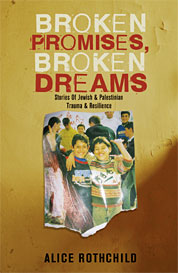
author of 'Broken Promises, Broken Dreams--Stories of Jewish and Palestinian Trauma and Resilience'. (Royalties from the book are donated to Jewish Voice for Peace Boston.)

Negotiations with Israel on a possible settlement freeze have fallen short. The settlements are an obstacle to peace, explains Dr. Rothchild. Other crises for Palestinians such as the ongoing blockade of Gaza continue, we hear about the lack of health care, and the lack of information getting out to Israelis and Americans about what is really going on in Palestine.

TRT: 29:20

This is Part two of an earlier program. Part one can be found here. Both programs stand alone.

Download at Pacifica's Audioport here or here and search Talk Nation Radio.
Or at Radio4all.net and Archive.org

Music
Our theme music is by Fritz Heede
We also hear, We Shall Not Be Moved, performed by 'A Besere Velt' choir. In English their name means, 'A Better World'. Dr. Rothchild and her husband sing in this community chorus, which is part of the Boston Workmen's Circle. [You can find a link to this Music here.]

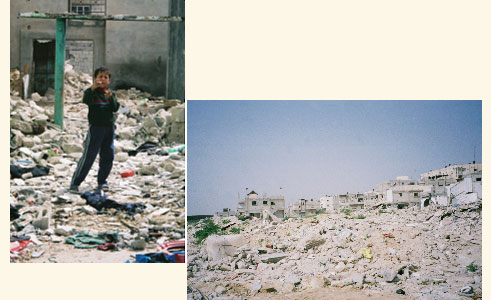
From Chapter 11, Broken Promises, Broken Dreams, 'The Gaza Community Health Program has documented that children in Rafah have experienced extreme levels of violence and trauma and this affects their emotional and cognitive health and development. Here a young boy pretends to shoot at us.'

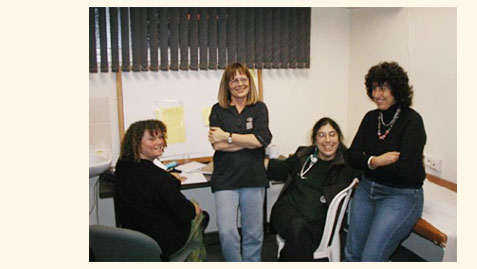
We met two Israeli women, Noa Kaufam on the left, Ella Yedaya on the right, doing alternative military service at PHR I, Physicians for Human Rights, Israel. Alice Rothchild M.D., second from left.

From today's broadcast Dr. Alice Rothchild, on the Israeli settlements: 'I think that understanding the impact of the settlements is critical to understanding the conflict. Because if you can imagine that there is this territory called the West Bank which is 22% of historic Palestine, which in the 1980's [Yasser] Arafat said OK just give us the 22% and we'll agree to lay down our arms and recognize a two state solution. And then you imagine, since 1967 a steady growth of Jewish towns and cities which are called settlements into this territory so that now there are some, almost 500,000 Jews living in settlements and in greater Jerusalem and in ever expanding neighborhoods in Jerusalem; this is a major land grab.
It also involves the most fertile soil, and the water aquifers, and in the Middle East, water is gold. So what the settlements do is they create facts on the ground, and these facts on the ground are totally in favor of Jewish settlers. So that when you travel around the West Bank, when I travel around the West Bank, you see all of these cities that are built on hilltops and then in the valleys there are Palestinian towns that are basically starving, that don't have enough water, that don't have a good road, that don't have electricity. And what happens with the settlements is that there are sort of approved settlements, which are still illegal, and then there are unapproved settlements, which are also illegal. And the unapproved ones are the little caravans and the settlements keep going further and further into the West Bank, and its totally destroying the Palestinian economy.
Peace Now said it is something like, I don't know whether it's 93% of settlements are built on private Palestinian land. There is some number that's just stunning. So this is a land grab. And this is attempting to create facts on the ground that when there is a final settlement will be in favor of Jews owning more territory without Palestinians in it.
So I think the fact that Obama actually called attention to this was very important, I mean as opposed to Bush who said, Oh settlements are OK and sort of gave his blessing. But it's not only settlements, it's the fact of settlements'.

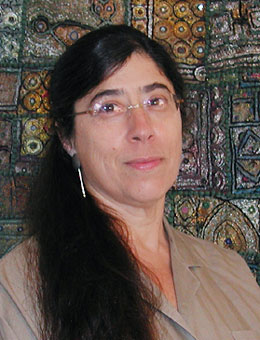
Dr. Alice Rothchild is an Assistant Professor of Obstetrics, Gynecology, and Reproductive Biology at Harvard Medical School, and she has devoted much of her medical career to working on behalf of poor and under served communities. She has been a tireless advocate for woman's rights, and was Medical Director of the Women’s Community Health Center in Cambridge, Mass. during the 1970s. She then co-founded the non profit medical organization, Urban Woman and Child Health, Inc. in Jamaica Plain, Mass. and later joined the staff of Beth Israel Deaconess Medical Center. She became a member of the staff of Harvard Community Health Plan, now Harvard Vanguard Medical Associates.

During our interview July 27, 2009, Dr. Alice Rothchild spoke about the significance of Israeli settlements when it comes to any peace talks or other kinds of negotiations. She also addressed the health care crisis for Palestinians, especially women, who often must give birth at home in unplanned natural pregnancies due to a lack of ability to cross checkpoints to get to a hospital.

See Dr. Alice Rothchild's article, Avigdor’s Ascent here. And her more recent piece, Lieberman's Ascent has roots in 60 years of Jewish history, here.

She also warns Jews and others about evangelical leaders who would call on them to make Aliya, [also spelled, Aliyah] a spiritual journey to Israel:

'I would say that making an all with people whose main goal is to get you there so there can be an apocalypse and you can either die or convert is a really dubious kind of decision and that Jews who do that have basically sold their soul. And a lot of settlements are funded by the evangelical right. So you have to ask, with friends like this? What are you doing? It's another one of those serious problematic things in political history'.

This is the Jewish Government's description of Aliya.

Dr. Rothchild expressed these concerns in response to our questions about Rabbi Yechiel Eckstein, founder of Wings of Eagles, a group that raises money through infomercials asking Christians to give money to pay air fare to bring Jews from Russia, Ethiopia, and other places, to Israel. The fund raising videos feature former Watergate felon, Charles [Chuck] Colson, singer Pat Boon, and US Senator Joseph Lieberman, endorsing the Rabbi. Some of the fund raising videos began with the words, end days' repeated three times.

Here is a link to an article by Bill Berkowitz in Talk to Action, about Rabbi Eckstein. He points out that Eckstein partnered with Ralph Reed in 2002 to found, Stand for Israel. In his own descriptions of what his organization does, Rabbi Eckstein says they raise money, pray, work to build support for Israel, and lobby.

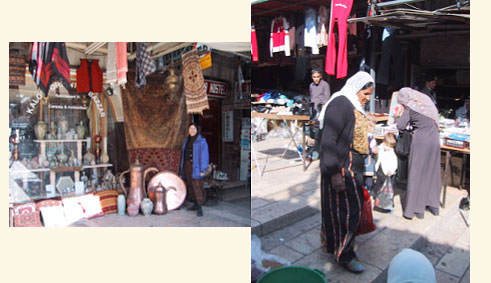
Photos in chapter 5 of Broken Promises, Broken Dreams..'Jerusalem is also the center of Jewish religious Orthodoxy. On the left, women are praying at the Western Wall. On the right, an Orthodox man in full beard and tall black hat waits for a bus, praying.'
As of March 2008 in Gaza, health care conditions had deteriorated to the point where many complicated surgeries could no longer be done, that according to a Time Magazine story by Tim McGirk. Palestinian children face starvation, stunted growth, and the entire population faces extreme risks from diseases like tuberculosis, which had risen nearly 60% by 2003. Still the blockade continues and health care workers cannot get through with medical supplies or to offer their assistance.

Other credits: We also hear clips of Secretary of State Hillary Clinton who called Israel's eviction of 50 Palestinians, August 2nd a provocation. Norman Finkelstein, explains part of the history of what Hamas offered prior to the Israeli attack on Gaza. Did Israelis reject a more moderate Hamas that could have been a partner?
BBC Middle East reporter, Katya Adler, interviews students in settlement re land for peace.

Israeli Foreign Minister Avigdor Lieberman says no to a freeze on settlements.


News & Media Blog Directory

Thursday, July 30, 2009

Dr. Alice Rothchild, The struggle for truth about Israel and Palestine

Talk Nation Radio for July 30, 2009

Dr. Alice Rothchild: The struggle for truth about Israel and Palestine

Physician, Author, Co-Chair, Jewish Voice for Peace, Boston, on the painful reality of US and Israeli policies and their impact on Palestinians.


TRT: 29:41
Produced by Dori Smith
Download at Pacifica's Audioport, here or at Archive.org and Radio4all.net PT 1 of 2, stands alone

Dr. Alice Rothchild is an obstetrician and gynecologist who has long worked to call attention to woman's rights, human rights, and questions of justice.

Alice Rothchild, M.D. is author of the book 'Broken Promises, Broken Dreams, Stories of Jewish and Palestinian Trauma and Resistance'.

We discuss the political side of the humanitarian crisis in Palestine, noting the power of the press and the influence of the settler movement. Powerful political figures have been supporting the current government, funding the settler movement, pointing to religious entitlement over land that has been in dispute for decades.

See article by Dr. Alice Rothchild, Avigdor's Ascent, May 2009 here.


News & Media Blog Directory

Wednesday, July 22, 2009

John Feffer on President Obama, Foreign Policy, and the Cost of Empire

Talk Nation Radio for July 22, 2009
John Feffer on President Obama, Foreign Policy, and the Cost of Empire

A discussion with John Feffer about his July 14, 2009 'World Beat' column in Foreign Policy in Focus, The Cost of Empire

Produced by Dori Smith
Download at Pacifica's Audioport here and at Archive.org and Radio4all.net


John Feffer's July 14th piece is titled, 'The Cost of Empire'. In it he refers to President Barack Obama as the 'consummate pitch man'. We spend the half hour with John Feffer, co-Director of Foreign Policy in Focus, FPIF.org to talk about where we are in foreign policy terms under President Obama.

A former Pan Tech Fellow in Korean Studies at Stanford University, John Feffer is a specialist in East Asia as well as the Balkans. He runs programs on military spending in East Asia and post conflict identity issues in the Balkans and has written or edited eight books, the latest on North Korea and South Korea. He comes from a background of having worked for AFSC, The American Friends Service Committee, a Quaker organization, based in Tokyo and Eastern Europe.

Contributors to Foreign Policy in Focus covered the Obama campaign, now they study President Obama's foreign policy challenges and opportunities. Writers at FPIF.org provide original articles and reports on topics related to foreign policy. They do it through eyes that search for peace and justice, equal rights, economic rights, and better US policy in general.

In recent issues, Conn Hallinan maps conflict in Africa, flagging sites where future energy supplies are having an impact on policy, Eric Leaver and Daniel Atzmon take a sober look at US policy in the MidEast, Phillis Bennis analyzes what the Obama White House has said after Iran's elections. Emira Woods looks at Obama's visit to Africa's 'Oil Gulf' and Stephen Zunes points out that Iranians need no lessons in democracy from the US. And Rostam Pourzal asks, 'Would MLK Back Iran's Protesters'?

We take a look at the way Obama's policies come across versus the heart of the matter. Has Obama's foreign policy led to a split within the U.S. peace movement? John Feffer explores some of the existing divisions and offers his best advice on how to hold Obama accountable. Remind him of his own words!

Brookings Institute figures US needs more troops for Afghanistan.

CNN wire, US needs still more troops for Afghanistan, July 17, 2009

Related News Headlines
July 22, 2009

Even as peace groups celebrate a Congressional vote to end production on the F-22, an outdated and costly aircraft, Georgia Republican Sen. Saxby Chambliss is making plans to sell the planes to Japan. And before they voted to kill the F-22, members of Congress voted to build 12 more beyond the 187 already authorized. Hi military budgets, troop build ups in the Middle East, this time in Afghanistan, harsh rhetoric by Secretary of State Hillary Clinton on Iran--Do things only sound good under Obama, but turn out much the same as they were under George W. Bush?

F-22 production not quite dead yet, despite senate vote
By Thomas L. Day


News & Media Blog Directory

Thursday, July 16, 2009

Save the News, an interview with Josh Stearns of Free Press

Talk Nation Radio for July 16, 2009
Save the News, an interview with Josh Stearns of Free Press


Produced by Dori Smith
TRT:29:34
Download at Pacifica's Audioport or at Radio4all.net and Archive.org

Free Press has critiqued the recent meeting at the Aspen Institute where leaders in the corporate press discussed ways to improve their industry. It's a non starter in terms of any real improvements to news, but was essentially a discussion about how they could increase profits. The Free Press effort outlined at www.savethenews.org involves a broad program of education and the creation of a broader, more healthy public media system with more non profit and low profit businesses.

Founded in 2002 Free Press has set the bar for activism about media ownership and media reform. They have challenged corporate lobbyists who would bend the FCC, Federal Communications Commission, to their will. And they have worked against limitations on internet access. Free Press staff like Josh Stearns have worked for media justice and they hope to broaden media ownership and limit the giant monopolies that have failed to provide a news resource to serve the needs of a democracy.

Also, could a new plan announced by the White House July 14th, be used by independent minded people interested in training as journalists? During his speech at Macomb Community College in Warren Michigan July 14th, President Barack Obama outlined a plan to commit $12 billion for community college growth.

Obama said his plan could be used by students seeking jobs in the growing alternative energy industry, health care, or technology. He mentioned companies like Cisco which have existing relationships with community colleges, and he encouraged administrators to expand existing online programs to build what he called an Open Source clearinghouse.

Josh Stearns explains how this new funding could be an opportunity for training for people hoping to help Save the News.

The initiative comes in response to a virtual death of news media in America. Newspapers have gone out of business or downsized, the Associated Press reports that 100 publications in over 32 states have dropped one or more days of print coverage to save money. TV stations are popularizing their content, reducing the amount of actual news reporting down to the point where the weather has become the main attraction for network affiliates. And NPR, National Public Radio, brought in a new CEO, Vivian Schiller, former head of on-line operations at the New York Times, and they have been popularizing their sound by using long features and rock music to attract what they hope will be a wider audience. Finally, a loss of advertising dollars has driven major newspapers to contract with net consortium world of Yahoo! for sharing ad revenues.

http://www.savethenews.org

Please contact Dori Smith at talknationradio@gmail.com for information about this free weekly broadcast.


News & Media Blog Directory

Thursday, July 9, 2009

Greenpeace climbers scale Mount Rushmore to Send Message to Obama

In this picture provided by the environmental group Greenpeace, Greenpeace climbers rappel down the face of Mount Rushmore National Memorial in Keystone, S.D. on Wednesday to unfurl a banner that challenges President Obama to show leadership on global warming. A federal prosecutor says a dozen people were taken into custody after the incident.
AP Photo

Global warming, world economies, and nuclear weapons have been the topics as the Obama administration moved on from the 2009 Moscow Start Talks to the G8 Economic Summit. The White House issued a fact sheet: Meeting the International Clean Energy and Climate Change Challenges, and held a press briefing.

"Every nation on this planet is at risk. And just as no one nation is responsible for climate change, no one nation can address it alone. That is why, back in April, I convened this forum of the world’s major economies – responsible for more than three-quarters of the world’s carbon pollution. And it is why we have gathered again here today." President Barack Obama, L'Aquila, Italy. July 9, 2009


The Status Quo is Not Sustainable, says U.S. Special Envoy Todd Stern
Overview of W.H. press release 7-9-09

Concerns about the US economic crisis aside, "You can't wait" on addressing climate change, the U.S. Special Envoy for International Economics, Todd Stern, told reporters gathered at an international press conference in L'Aquila, Italy, "I mean, the status quo is not a sustainable thing".

At the U.S. Press Filing Center in L'Aquila, Italy, U.S. Special Envoy for International Economics Todd Stern, held a press conference. The Group of Eight discussed how a process of global governance might be established, and Stern made a brief statement:

MR. STERN: Thanks very much. I'm just going to run very briefly through a few highlights from the declaration, and then we can go right to questions.

There were a number of key points, I think, that came out in the declaration agreed to by the 17 leaders. These include the agreement that global and national emissions should peak as soon as possible, that the MEF developed countries will undertake prompt action to produce robust reductions in their emissions in the midterm, consistent with their long-term ambitious goals -- in their case, 80 percent below by 2050.

The MEF developing countries agreed to take prompt action to reduce their emissions as compared to their "business as usual" trajectory in the midterm. The parties also agreed to prepare long-term low-carbon growth plans to guide their long-term development. They agreed to work between now and Copenhagen to arrive at a 2050 goal -- we talked about that a little bit yesterday. And also there was an agreement on reductions from deforestation.

There was an addition, an agreement to establish a global partnership to drive transformational technology development and a set of countries agreeing to take the lead in a number of different technologies. Also, a broad set of agreements with respect to the structure of a financing package -- not a number, but a structure, including a number of elements such as the sources of the financing, including the carbon markets and public sources as well, that the establishment of -- the set up of the fund should take advantage of existing institutions, should have balanced governance and the like. And there are also some important sentences with respect to adaptation.

So it was an overall declaration, it includes a number of important points, a number of the mitigation points that I just mentioned have never been agreed to before and I think that's -- and we can take questions.

Several reporters tried to offer what might be called a way out for leaders concerned about the burden of addressing global warming.

Question: (no name given) The ordinary American taxpayer may say, wait a minute, is this really the right time to impose a cap and trade system, to place a new tax on carbon when the U.S. economy is struggling to get out of the deepest recession since the Great Depression? I mean, can you address that, why there shouldn't even be some anxiety about that and that shouldn't at least in some way influence the debate about this issue?

MR. STERN: Sure. Sure. It's understandable that there's some anxiety about it, but there's a couple of points to be made and the President has made these points I think on many occasions.

First of all, the nature of the problem is such that you can't wait. I mean, the status quo is not a sustainable thing.

But secondly, there is -- you could put it aside, pretend that you can wait for some number of years, continue to lock in investment in high-carbon technology -- or you can take steps to build the kind of economy that is going to be sustainable, that is going to build a plant and equipment that's going to be able to last. It's the right economic move to make. If you don't make this you're going to end up spending more money a few years down the road.

So there's no point in having a huge, big stimulus effort which simply locks in old technology, locks in a high-carbon path -- which is completely unsustainable; science, unfortunately, is undoubtedly just going to get worse on this issue, not better -- and the plain reality, this is absolutely compellingly true for countries like China and India and everywhere else, as well as that the high carbon cap is simply untenable. And you're going to suffer economically -- not just in the environment -- you're going to suffer economically if you choose that path, because in not very many years, if it looks bad now it's going to look worse and it's going to be completely untenable.

So the President is making the right choice, and it is the right choice to move forward on this now, even though the anxiety people feel is quite understandable.

Q Mike, did the anxiety come up in the conversations? Did any of the member nations wonder aloud if this is really the right time, if another time, a better economic scenario might be wiser?

MR. FROMAN: I think the only instance in which it came up was a recognition that the challenge that the global community faces would be difficult under any circumstance. In the current economic circumstance, it is challenging, but that it's equally urgent. And as Todd said, it's not something that can be wait -- that can wait and just be put off for several years.

And I would just -- I just want to underscore one thing that Todd said earlier -- and, again, I hope you all have the fact sheet. The half-dozen specifics in the mitigation paragraph that were agreed to by developed and developing countries are really quite significant steps forward and quite significant contributions to the U.N. negotiations. It's not the end of the line. As Todd said, there's still negotiations to be had, there's still numbers to fill in. But those are things that have been agreed to for the first time by developing and developed countries alike, and really make a meaningful contribution towards the resolution of this issue.


News & Media Blog Directory

Francis A. Boyle on 2009 US -- Russia Start Talks

Talk Nation Radio for July 9, 2009

Francis A. Boyle on US and Russia Start Talks
History, perspective, and what's going on behind the scenes?

Many news reports have offered the conclusion that former President Vladimir Putin remains the real power in Russia today. They claim President Dmitri Medvedev is a figurehead. What about the power and authority of US President Barack Obama in Washington? Does he possess top control over foreign and military policy or diplomatic endeavors? Or might other forces within the Obama administration, the US Military, Pentagon, neoconservative advisory team, or military industry, retain the level of control they held under Bush/Cheney?

Professor Francis A. Boyle expresses hope that President Obama will make good on campaign promises about the use of diplomacy over the use of force, and that he will in fact negotiate new, binding weapons treaties for our century that can ensure peace.

Professor Boyle's book, "The Criminality of Nuclear Deterrence," defines the stakes posed by weapons of mass destruction in a post 9/11 world. He clarifies the history of the Start Talks and talks about what is at stake in 2009. (Amazon Books and see more below)

Francis A. Boyle also critiques the Obama team's negotiations noting that special adviser to the President, Michael A. McFaul, announced America's decision against putting the ABMs on the table prior to the Start talks.


Produced by Dori Smith, Talk Nation Radio studios in Storrs, Connecticut
TRT: 29:43, music fades 7.sec
Download at Pacifica's Audioport here or at Radio4all.net and Archive.org in various formats suitable for broadcast and or podcast.
Music by Fritz Heede, composer and musician who wrote and performed the soundtrack for the film, The Oil Factor.

International Law Professor Francis A Boyle joins us to talk about the Start Talks between US President Obama and Russian President Medvedev. [See related, G8 Summit, Addressing the Nuclear Threat, here, with Under Secretary of State Bill Burns, with the President at the G8 for portion on Iran, "because he's been so heavily involved in this, that he can walk you guys through what they're working on".]

What were the successes or failures of the preliminary Start Talks? What has been going on behind the scenes? What is the impact of having so many Neoconservatives on the White House team?

Francis A. Boyle has advised nations and societies at risk including Palestinians and the People of Bosnia and Herzegovina, at the ICC, International Criminal Court, and the People of Chechnya in a claim of genocide against Putin's Russia.

Francis A. Boyle is a leading expert on the crisis weapons of mass destruction create. He drafted the Biological Weapons Anti-Terrorism Act of 1989 and the American Implementing Legislation for The 1972 Biological Weapons Convention.

Bio: A scholar in the areas of international law and human rights, Professor Boyle received a J.D. degree magna cum laude and A.M. and Ph.D. degrees in political science from Harvard University. Prior to joining the faculty at the College of Law, he was a teaching fellow at Harvard and an associate at its Center for International Affairs. He also practiced tax and international tax with Bingham, Dana & Gould in Boston.

As an internationally recognized expert, Professor Boyle serves as counsel to Bosnia and Herzegovina and to the Provisional Government of the State of Palestine. He also represents two associations of citizens within Bosnia and has been instrumental in developing the indictment against Slobodan Milosevic for committing genocide, crimes against humanity, and war crimes in Bosnia and Herzegovina.

Professor Boyle is Attorney of Record for the Chechen Republic of Ichkeria, conducting its legal affairs on a worldwide basis. Over his career, he has represented national and international bodies including the Blackfoot Nation (Canada), the Nation of Hawaii, and the Lakota Nation, as well as numerous individual death penalty and human rights cases. He has advised numerous international bodies in the areas of human rights, war crimes and genocide, nuclear policy, and bio-warfare. (More on Professor Francis A. Boyle here.

Where to purchase books by Francis A. Boyle
Bookmasters, According to Bookmasters, "The 2002 book, The Criminality of Nuclear Deterrence provides a succinct and detailed guide to understanding the arms race from Hiroshima/ Nagasaki through the SALT I, SALT II, ABM and START efforts at arms control, to Star Wars/National Missile Defense, U.S. unilateral abrogation of the ABM Treaty, and events in Afghanistan and beyond".

"It clarifies the relevant international law, from the Hague Conventions through the Nuremberg Principles to the recent World Court Advisory Opinion, as well as tracing contradictions in and contraventions of domestic guidelines established in the U.S. Army Field Manual of 1956 on The Law of Land Warfare, which remains the official primer for U.S. military personnel concerning the laws of war to which they must regard themselves as subject".

Accompanying story in Counterpunch by Francis A. Boyle here Bush Jr.'s Nuclear Sabre-Rattling: The Rogue Elephant, "In quick succession the world saw these Bush Jr Leaguers repudiate the Kyoto Protocol on global warming, the International Criminal Court, the Comprehensive Test Ban Treaty (CTBT), an international convention to regulate the trade in small arms, a verification Protocol for the Biological Weapons Convention, an international convention to regulate and reduce smoking, the World Conference Against Racism, and the Anti-Ballistic Missile Systems Treaty, inter alia. To date the Bush Jr Leaguers have not found an international convention that they like. The only exception to this rule was their shameless exploitation of the 11 September 2001 tragedy in order to get the US House of Representatives to give Bush Jr so-called "fast-track" trade negotiation authority so as to present the American People and Congress with yet another non-amendable fait accompli on behalf of American multinationals, corporations, banks, insurance companies, the high-tech and biotech industries, Wall Street, etc. The epitome of "globalization," American-style".

Bookmasters, Using International Law to Clarify and Resolve the Israeli/ Palestinian Conflict, "No regional crisis has greater potential to affect world peace than the Israeli/Palestinian conflict. None has proved more intractable, and seemingly impossible to resolve. Yet, at the end of the day, most commentators agree that the only solution to the conflict lies in the creation of a viable Palestinian state under the guidance and norms of international law: only international law can provide an autonomous legal system capable of rendering objective judgment on the claims of the competing parties".

Special thanks to Professor Francis A. Boyle for spending time with us working to educate us on Obama policy and global events during early 2009. We are in your debt.

Press Notes:
Headline July 9, 2009 CNN BAGHDAD, Iraq (CNN) -- "The U.S. military has released five Iranian diplomats detained in Iraq since early 2007, the Iraqi government and Iran's embassy in Baghdad said Thursday.
-- The five have been transferred to Iraqi custody and were expected to be taken to the embassy. The U.S. military would only say it was looking into the report".

Robert Gibbs, July 9, 2009 From: THE WHITE HOUSE, Office of the Press Secretary U.S. Press Filing Center, L'Aquila, Italy

Robert, you all pretty much laid out yesterday what's -- especially on climate change -- what's going to be in the G8 language and the MEF language. What's in play today? Do you expect any movement on that front at all, or what's --
MR. GIBBS: Well, no, I mean, I think they'll just continue to work through that. I think they will -- I mean, obviously there are some meetings throughout the day on trade. Again, that was a topic that the President talked to President Lula about.
"I think obviously a lot of business was done on some of the major topics -- climate and Iran -- yesterday.


News & Media Blog Directory

Sprouts: Voices of Concern about Obama's MidEast Policies

This week's Sprouts: Voices of Concern about Obama's MidEast Policies
Produced by: Dori Smith and David Haseltine, WHUS Storrs, FM 91.7 at the University of Connecticut

Left KU Channel
Thursday, July 9, 2009 3PM EST
TRT: 29:23
Download as broadcast quality .mp3: here Or go to http://audioport.org
and search the word "Sprouts" - or go to Sprouts:
"Voices of Concern about Obama's MidEast Policies"


This week's stories: There are important conversations taking place in the US and around the world as the foreign policy strategies of President Obama andVice President Biden become more clear.

Peace activists, progressive Democrats, international scholars, and independent journalists who were critical of Bush and Cheney policies are growing more critical of Obama policies.

For instance, the U.S. is said to be withdrawing from Iraq, but is it a true withdrawal or will US forces remain in Iraq to operate US Military bases from which US forces can now prosecute a more regional war? Should the US continue the Afghan war and escalate it? What are the Obama administration's arguments? Should the US continue to militarize Pakistan, where US Military forces have been aiming drones at villages along the border to take out militants. A UK judge is criticizing the Obama administration for use of amoral weapons which are killing civilians in Pakistan and Afghanistan.

Finally, Iranian Americans have been using the word "pride" in discussing their sentiments about the protest movement in Iran after the election there. Is there a budding of new nationalism growing?

What will the impact of such a change be on Iranian and US policies? We spoke with Trita Parsi to get his thoughts on the potential down side for an Obama policy that seems to cultivate the demonstrations and opposition activities in Iran. The U.S. denies a role, however, Jeremy Hammond, editor of Foreign Policy Journal has raised questions of a continued role for the US State Dept. and other branches activated during the Bush years.

WHUS public affairs director David Haseltine looks at the post election demonstration movement with Professor Cyrus E. Zirakzadeh, an expert on Comparative Social Movements in the Political Science Department at the University of Connecticut. He talks about the people involved in the protest, the political figures, and offers his analysis on where Iranians go from here.

We also hear from:

Veteran for Peace Camillo Mac Bica, on US War operations in Iraq and Afghanistan.
Journalist Sherwood Ross of Anti War News Service.
Famed international lawyer Francis A. Boyle
Iranian American scholar Trita Parsi, President of the National Iranian American Council.
Jeremy Hammond, Editor of Foreign Policy Journal.

Vietnam Veteran and Vet for Peace Camillo Mac Bica has worked tirelessly to end US Wars in Iraq and Afghanistan. He finds himself frustrated by President Obama's arguments for escalating the Afghan War and using drones in Pakistan. And peace activists like Mac Bica are not alone in their sharp criticism of Obama policy. On July 6th one of Britains most senior judges, Lord Bingham, said the US drones used in Afghanistan, Pakistan, and Gaza, as well as US cluster bombs and landmines, "are beyond the pale" and should probably be banned by the international community. His statement appears in British paper, The Independent. Sherwood Ross wrote a scathing indictment of the Afghan operation on July 3rd, condemning US Congress and the Obama administration, and calling the war illegal. He also looked at headlines about ongoing Salt Talks between President Obama and Russian President Medvedev, and he saw a down side to America's agreement for ongoing use of Russian territory to supply US forces in Afghanistan.

Sprouts is a weekly program that features local radio production and stories from many radio stations and local media groups around the world. It is produced in collaboration with community radio stations and independent producers across the country. The program is coordinated and distributed by Pacifica Radio and offered free of charge to all radio stations. For information, or if you would like to feature your work on Sprouts, contact Ursula Ruedenberg at ursula@pacifica.org.

Please also see: http://www.talknationradio.org


News & Media Blog Directory

Wednesday, July 1, 2009

Has the US been fomenting unrest in Iran? An interview with editor Jeremy R. Hammond of Foreign Policy Journal

Talk Nation Radio for July 1, 2009
Has the US been fomenting unrest in Iran?


An interview with editor Jeremy R. Hammond of Foreign Policy Journal about his June 23rd story: "Has the U.S. Played a Role in Fomenting Unrest During Iran’s Election?" It offers a kind of history of US propaganda and covert operations aimed at regime change in Iran.

Two versions uploaded for your convenience. 1. Non compressed, may be better for some podcasters. 2. Compressed for louder audio.


Produced by Dori Smith
TRT: 29:44
Download at Pacifica's Audioport and at Radio4all.net and Archive.org

Other topics include US support for Iranian opposition groups through NED, the National Endowment for Democracy and US AID, the twitter phenomenon, use of anonymous sources, the CIA in Iran, US support for militant organizations operating in Iran, Bush policy on Iran seems to be continuing under President Obama.

During the run up to the Iraq War, Hammond criticized Bush administration arguments about WMD. He then founded Foreign Policy Journal to cover US policy. See this link to Foreign Policy Journal featuring critical analysis of U.S. foreign policy from at home and abroad. It features writing by Jeremy Hammond and Iranian writer Kourosh Ziabari, Pakistani, Shalid R. Siddaqi, investigative reporter Greg Palast, Nima Shirazi of Wideasleepinamerica.com, and others.


Recent articles by Jeremy R. Hammond June 23, 2009 Has the U.S. Played a Role in Fomenting Unrest During Iran's Election?

July 1, 2009 US ‘has intelligence agents working in Iran’. A former US national security adviser has told Al Jazeera that US intelligence agents are working in Iran. May 21, 2009

April 23, 2009 Clinton Says Iran Policy Goal to Gain Support for “Crippling Sanctions”

See also: June 25, 2009. In Fraud We Trust? by Nima Shirazi.


News & Media Blog Directory